

In a busy emergency department late at night, every second matters as a patient arrives with chest pain. The ICU bed, ventilator, and monitoring system are ready, but there are not enough nurses on shift.
This is the hidden crisis many healthcare organizations are facing nowadays. The conversation is often about patient numbers, funding, or new buildings. But the real pressure point is people. The current staffing crisis is not just an HR issue. It is directly affecting how hospital infrastructure functions every single day.
Hospitals are designed for capacity. They are built with technology, equipment, and emergency planning in mind. But when staffing drops, even the best infrastructure struggles to deliver care efficiently.
Understanding the Growing Staffing Crisis
Across the world, hospitals are experiencing staffing shortages that directly affect capacity planning and infrastructure utilization.
- Aging workforce and retirements
- Burnout after pandemic years
- Rising patient volumes
- Limited nursing and physician training capacity
- Rural and specialty skill gaps
From an operational standpoint, infrastructure and workforce are deeply connected. A hospital can expand beds, invest in advanced imaging machines, or build new wings. But without skilled professionals to operate them, those investments cannot deliver value. To understand broader strategies to solve workforce shortages, read our guide on solving healthcare workforce shortages.
The Direct Impact on Hospital Infrastructure
Let us look at what really happens inside hospitals when staffing numbers fall.
Underutilized Infrastructure
An ICU may have 20 beds. Due to limited nurses, only 14 beds can be safely used. The remaining beds sit empty. Equipment remains idle. Infrastructure capacity is technically available but practically unusable.
This reduces return on infrastructure investment and increases cost per patient.
Delayed Upgrades and Expansion
When leadership is constantly solving immediate workforce gaps, long-term infrastructure planning gets delayed. New construction projects pause. Technology upgrades slow down. Preventive maintenance may be postponed.
Increased Hospital Operational Challenges
Staff shortages create workflow bottlenecks. Admission processes slow down. Discharge planning gets delayed. Operating rooms run below capacity.
These hospital operational challenges impact patient satisfaction, safety metrics, and financial performance.
Strain on Digital Infrastructure
Electronic health records, telehealth systems, and monitoring platforms require trained staff. When teams are overstretched, documentation errors increase and system adoption drops.
Technology cannot replace human judgment, but it requires human engagement to function effectively.
Example –
In 2022, several US hospitals reported temporarily closing emergency rooms not because of physical damage or lack of equipment, but because they did not have enough qualified staff to run shifts safely.
In India as well, many district hospitals expanded bed capacity during COVID. However, nurse-to-patient ratios remained below recommended levels. This created operational inefficiencies even when infrastructure was technically expanded.
The lesson is clear. Buildings and machines alone do not deliver healthcare. Skilled professionals do. To reduce pressure on limited staff and keep infrastructure running efficiently, many hospitals are now adopting automation and AI technologies.
How Automation and AI Are Supporting Infrastructure Stability
Hospitals are now turning to automation and AI not to replace doctors or nurses, but to support them.
Here are practical examples:
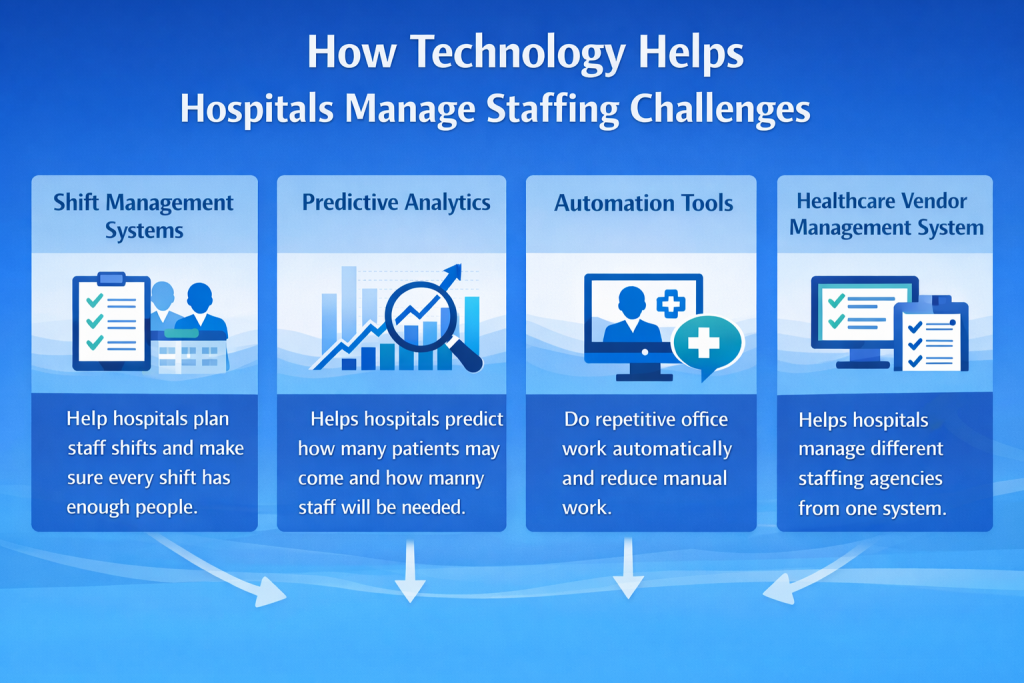
- AI powered workforce scheduling tools predict peak patient loads and optimize shift allocation.
- Automated patient flow systems help reduce waiting times.
- Predictive analytics tools forecast admission surges.
- Chatbots handle basic patient queries, reducing front desk workload.
- Robotic process automation manages repetitive administrative tasks like billing and documentation.
For example, some large hospital networks use AI based demand forecasting to align staffing with seasonal trends such as flu waves. This prevents sudden infrastructure overload.
Automation helps infrastructure breathe. It reduces pressure on limited staff and improves efficiency.
Healthcare Staffing Shortage Solutions for Hospitals
Solving staffing shortages requires strategy, not temporary fixes.
Here are practical and sustainable Healthcare staffing solutions for hospitals:
- Strategic workforce planning using predictive analytics
- Cross training staff for flexible deployment
- Expanding telehealth to manage non critical cases
- Partnering with staffing agencies for surge capacity
- Investing in retention programs to reduce turnover
- Using digital tools for better workload distribution
Hospitals that treat workforce planning as part of infrastructure strategy perform better in long-term resilience.
How Hospitals Manage Workforce Shortages
A Healthcare vendor management system helps hospitals centralize and streamline temporary workforce management.
Instead of managing multiple staffing agencies through email and spreadsheets, hospitals use one platform to:
- Track vendor performance
- Monitor compliance
- Compare rates
- Ensure credential verification
- Fill open positions faster
This improves transparency and reduces infrastructure downtime caused by staffing delays.
For hospital administrators, this means infrastructure assets such as beds, surgical units, and diagnostic facilities remain fully operational.
Why This Topic Matters for the Future of Healthcare
Infrastructure planning in healthcare can no longer be separated from workforce planning.
Governments are investing billions in new facilities. Private hospitals are expanding specialty centers. Digital health adoption is accelerating.
But unless workforce capacity grows alongside infrastructure, gaps will continue.
For healthcare leaders searching for sustainable growth, the solution lies in integrating staffing strategy with infrastructure development, supported by AI, automation, and intelligent workforce systems.
Hospitals that align people, process, and technology will not only survive the staffing crisis. They will build resilient systems ready for the next decade. For a deeper look at long-term strategies to address staffing gaps, read our guide on solving the healthcare workforce shortage effectively.
Final Thought
Healthcare is built on trust. Patients trust that when they walk into a hospital, someone skilled will be there to care for them.
Infrastructure supports that promise. But people fulfill it. Addressing workforce shortages is not just an HR responsibility. It is a foundational strategy for protecting hospital infrastructure, financial stability, and patient safety.
FAQs
How do hospital staffing shortages affect patient care?
Hospital staffing shortages can cause longer wait times and delays in treatment. When there are not enough nurses or doctors, the existing staff have to handle more patients. This can make it harder for hospitals to monitor patients closely and maintain the same level of care.
Which hospital departments face the biggest staffing shortages?
Emergency departments, Intensive Care Units (ICUs), operating rooms, and behavioral health units often face the biggest staffing shortages. These departments need specially trained professionals and require care 24 hours a day, which makes it harder for hospitals to keep enough staff available at all times.
How does a healthcare vendor management system help hospitals during staffing shortages?
It enables hospitals to coordinate with multiple staffing agencies through a single platform, improving transparency, reducing hiring delays, and ensuring critical hospital infrastructure remains operational.
What role does technology play in supporting hospital operations?
Technologies like AI-powered scheduling tools, predictive analytics, and automation help hospitals manage staff workload, predict patient demand, and improve daily operations. They also help hospitals plan staffing better and respond faster when patient numbers increase.
How can hospitals improve workforce planning for long-term stability?
Hospitals can adopt data-driven workforce strategies, invest in retention programs, build internal talent pools, and use predictive analytics to forecast staffing needs. These steps help hospitals plan ahead and maintain stable staffing levels even during sudden increases in patient demand.